
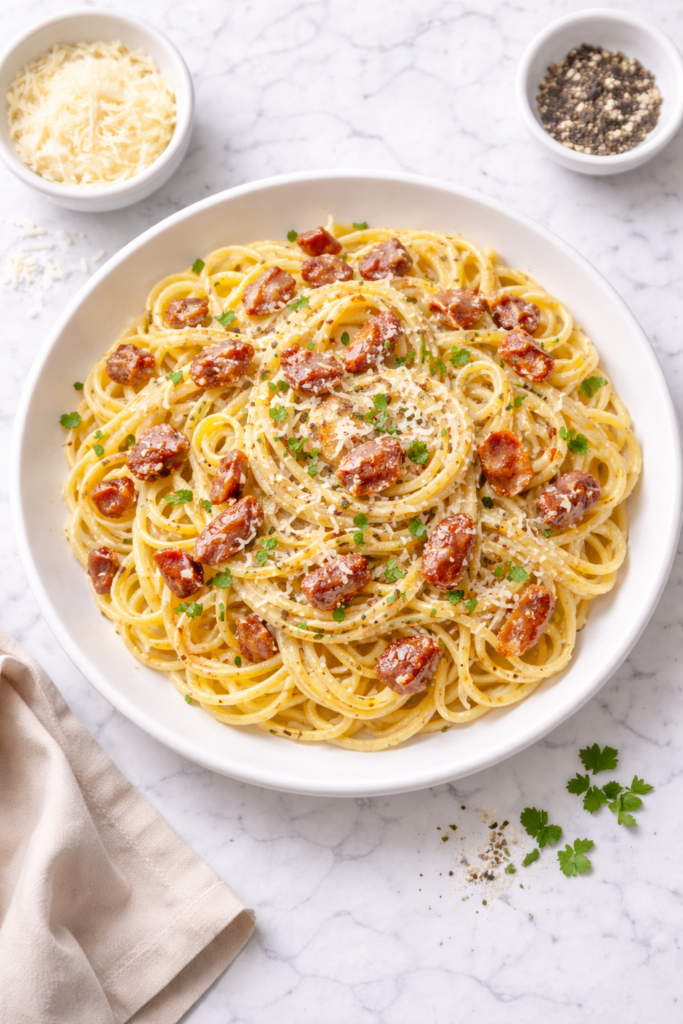
Pasta Carbonara is one of Italy’s most famous and beloved pasta dishes, known for its rich, silky sauce and deeply savoury flavour. Originating in Rome, this classic recipe uses a small number of simple ingredients to create a dish that is comforting, elegant, and unmistakably Italian.
Unlike many modern interpretations, authentic Italian carbonara does not contain cream. Instead, the creamy texture comes from a carefully balanced combination of eggs, cheese, and starchy pasta water. When prepared correctly, the result is a glossy sauce that coats the pasta beautifully without scrambling the eggs.
This Pasta Carbonara recipe stays true to traditional Roman cooking methods. It focuses on technique rather than complexity, making it ideal for beginners while still delivering the bold, authentic flavours that have made carbonara a timeless staple in Italian cuisine.
Recipe Overview
Prep Time: 10 minutes
Cook Time: 15 minutes
Total Time: 25 minutes
Servings: 4
Ingredients
Main Ingredients
- 400 g spaghetti (or rigatoni)
- 150 g guanciale (or pancetta), diced
- 3 large egg yolks
- 1 whole egg
- 80 g Pecorino Romano cheese, finely grated
- Freshly ground black pepper
Optional Substitutions
- Parmesan cheese (if Pecorino Romano is unavailable)
- Pancetta (if guanciale is unavailable)
Step-by-Step Instructions
- Bring a large pot of well-salted water to a rolling boil.
- Cook the pasta according to package instructions until al dente.
- While the pasta cooks, add the diced guanciale to a cold pan.
- Place the pan over medium heat and cook slowly until the fat renders and the guanciale becomes crisp.
- Remove the pan from heat and set aside, keeping the rendered fat in the pan.
- In a bowl, whisk together the egg yolks, whole egg, grated cheese, and a generous amount of black pepper.
- Reserve about 250 ml of pasta cooking water before draining the pasta.
- Add the hot pasta directly to the pan with the guanciale and toss gently to coat in the fat.
- Remove the pan from heat completely.
- Slowly add the egg and cheese mixture, tossing continuously to prevent scrambling.
- Add small amounts of reserved pasta water as needed to create a smooth, creamy sauce.
- Continue tossing until the pasta is evenly coated and glossy.
- Taste and adjust seasoning with additional black pepper if needed.
- Serve immediately with extra grated Pecorino Romano on top.
Cooking Tips & Variations
- Always remove the pan from heat before adding the egg mixture to avoid curdling.
- Use freshly grated cheese for the smoothest sauce texture.
- Guanciale provides the most authentic flavour, but pancetta works well if unavailable.
- Avoid adding salt to the sauce; the cheese and cured meat provide enough seasoning.
- For a slightly richer version, increase the number of egg yolks by one.
- Traditional carbonara does not include garlic, cream, or onions.
What to Serve With Pasta Carbonara
- Simple green salad with lemon dressing
- Steamed vegetables such as broccoli or asparagus
- Crusty Italian bread
- Light antipasti such as olives or marinated vegetables
Storage & Reheating
Pasta Carbonara is best enjoyed immediately after preparation. If necessary, leftovers can be stored in an airtight container in the refrigerator for up to 1 day. Reheat gently in a pan over low heat with a splash of water, stirring constantly. Avoid microwaving, as the eggs may scramble and alter the texture.
Freezing is not recommended due to the egg-based sauce.
Frequently Asked Questions
Is Pasta Carbonara supposed to have cream?
No. Authentic Italian carbonara relies on eggs and cheese for its creamy texture.
Can I use bacon instead of guanciale?
Bacon can be used if necessary, but it will change the flavour and is not traditional.
Why did my sauce turn grainy?
This usually happens when the eggs are added over high heat. Always remove the pan from the stove before combining.
Final Thoughts
Pasta Carbonara is a perfect example of Italian cooking at its finest: simple ingredients, precise technique, and outstanding flavour. This authentic Roman recipe delivers a rich, creamy dish without cream, relying instead on tradition and balance. Once mastered, it becomes a reliable favourite that never fails to impress.
Share Your Cooking Experience
Did you change any ingredients? We’d love to hear how it turned out.