
Introduction
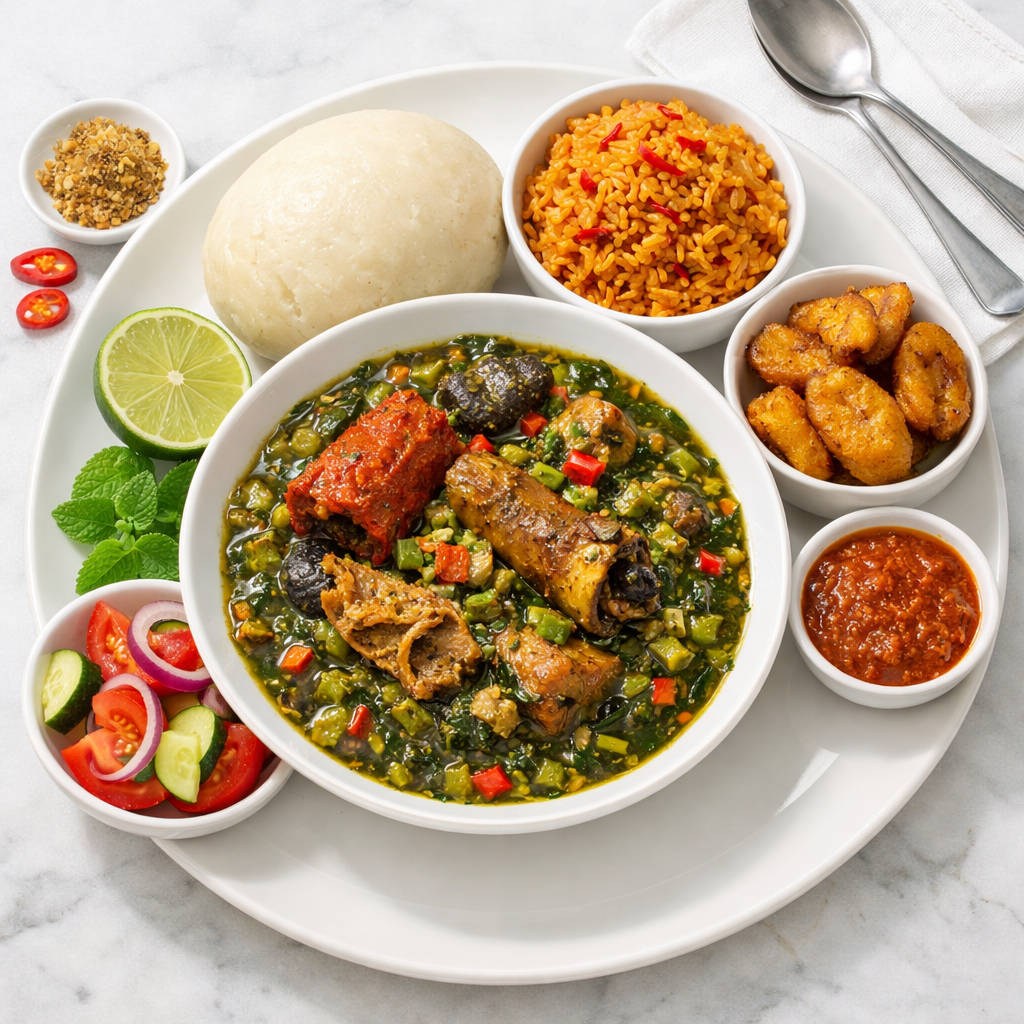
Okra soup, commonly known as Okro soup in Nigeria, is one of the country’s most beloved traditional dishes. It is enjoyed across many regions, with slight variations depending on local ingredients and cultural preferences. Known for its distinctive slippery texture and rich flavour, okra soup holds a special place in Nigerian home cooking and is often served at family meals, celebrations, and festive gatherings.
This soup reflects the heart of Nigerian cuisine: simple ingredients transformed into something deeply nourishing and satisfying. Okra soup is valued not only for its taste but also for its nutritional benefits, as okra is rich in fibre, vitamins, and antioxidants. Combined with proteins, leafy greens, palm oil, and spices, it becomes a complete and comforting dish.
This Okra soup recipe Nigeria style is a classic version made with meat, seafood, and vegetables, cooked gently to preserve flavour and texture. It pairs perfectly with traditional Nigerian swallows such as fufu, pounded yam, or eba.
Recipe Overview
Prep Time: 20 minutes
Cook Time: 30 minutes
Total Time: 50 minutes
Servings: 4–6
Ingredients
Proteins
- 500 g assorted meat (beef, tripe, cow foot, or goat meat)
- 100 g dried stockfish, soaked and cleaned
- 100 g smoked fish, deboned
- 1 tablespoon ground crayfish
Vegetables
- 300 g fresh okra, finely chopped or grated
- 1 cup chopped leafy greens (ugu or spinach)
Soup Base
- 3 tablespoons palm oil
- 1 medium onion, finely chopped
- 1–2 fresh scotch bonnet peppers, blended (to taste)
- 1 seasoning cube
- Salt, to taste
Liquid
- Meat stock or water, as needed
Step-by-Step Instructions
- Wash the assorted meat thoroughly and place in a pot.
- Add chopped onion, seasoning cube, and salt.
- Pour in enough water to cover the meat and cook over medium heat until tender.
- Add the stockfish and continue cooking for another 5 minutes.
- Add the smoked fish and gently stir to combine.
- Pour in the palm oil and allow the soup to simmer for 3–4 minutes.
- Add the blended pepper and ground crayfish, stirring gently.
- Pour in the chopped okra and stir lightly to maintain its texture.
- Allow the soup to cook for 5–7 minutes, stirring occasionally.
- Add the leafy greens and mix gently.
- Adjust seasoning with salt if needed.
- Cook for another 2–3 minutes and remove from heat.
- Let the soup rest briefly before serving.
Cooking Tips & Variations
- Finely chopping or grating the okra increases the soup’s natural draw.
- Avoid overcooking the okra to preserve its colour and texture.
- For a lighter version, reduce the palm oil slightly.
- Seafood lovers can add shrimp or periwinkles for extra flavour.
- Vegetarian okra soup can be made using mushrooms and vegetable stock instead of meat.
What to Serve With Okra Soup
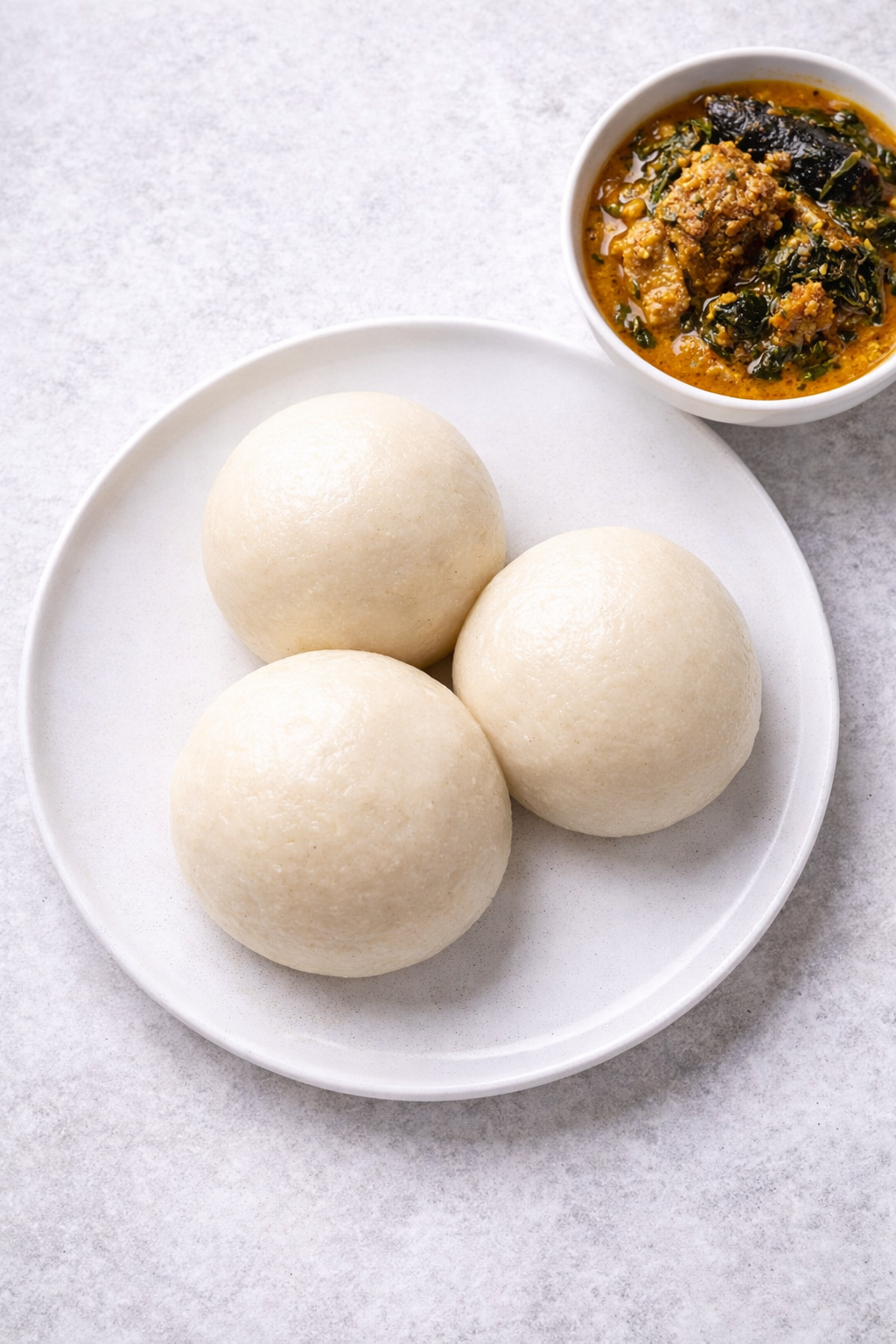
Okra soup is traditionally served with Nigerian swallows. Popular options include fufu, pounded yam, eba (garri), semolina, or amala. These starchy sides balance the soup’s texture and make the meal filling and satisfying.
Storage & Reheating
Allow the soup to cool completely before storing. Transfer to an airtight container and refrigerate for up to 3 days. Okra soup can also be frozen for up to 1 month. Reheat gently on the stovetop, stirring occasionally. Add a small amount of water or stock if the soup thickens too much.
Frequently Asked Questions
Why is okra soup slippery?
The slimy texture comes naturally from okra when it is chopped or cooked. This is a desired characteristic in traditional Nigerian cooking.
Can I use frozen okra?
Yes, frozen okra can be used if fresh okra is unavailable. Thaw and drain excess water before cooking.
How do I reduce the draw in okra soup?
Chop the okra into larger pieces and cook slightly longer, or add leafy vegetables earlier to reduce the slipperiness.
Final Thoughts
Okra soup is a timeless Nigerian classic that brings comfort, nutrition, and tradition to the table. This Okra soup recipe Nigeria style is simple, flavourful, and adaptable, making it perfect for both everyday meals and special occasions. Served with your favourite swallow, it offers an authentic taste of Nigerian home cooking that never goes out of style.

Share Your Cooking Experience
Did you change any ingredients? We’d love to hear how it turned out.