
Introduction
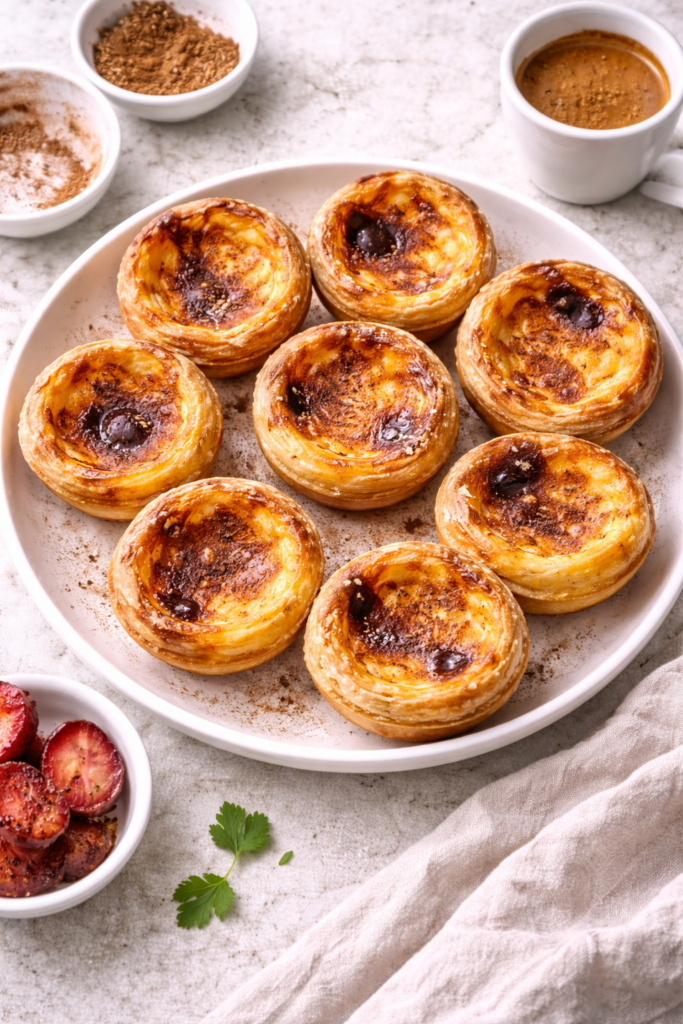
Pastel de Nata is Portugal’s most famous pastry, a beloved custard tart known for its flaky layers, creamy filling, and lightly caramelised top. Originally created by monks at the Jerónimos Monastery in Lisbon in the early 19th century, these tarts were born out of necessity. Egg whites were commonly used for starching clothes, leaving an abundance of yolks that inspired many of Portugal’s iconic desserts. From this tradition emerged Pastel de Nata, a pastry that has since become a symbol of Portuguese culinary heritage.
Today, Pastel de Nata can be found in pastelarias across Portugal, enjoyed warm with a dusting of cinnamon or powdered sugar. While the most famous version comes from Belém, where the original recipe remains a closely guarded secret, home-style pastéis de nata are a cherished part of everyday Portuguese life. They are served at breakfast, as an afternoon treat, or alongside a strong espresso.
At The Recipe Kitchen, we focus on authentic recipes from around the world, and Pastel de Nata is a perfect example of how simple ingredients and careful technique can create something truly special. This recipe is designed for home bakers, staying true to traditional flavours while being approachable and reliable.
Recipe Overview
- Prep Time: 25 minutes
- Cook Time: 20 minutes
- Total Time: 45 minutes
- Servings: 12 custard tarts
Ingredients
Pastry
- 1 sheet puff pastry, thawed if frozen
- Butter, for greasing the tin
Custard Filling
- 250 ml whole milk
- 200 g granulated sugar
- 30 g plain flour
- 4 large egg yolks
- 1 cinnamon stick
- 1 strip lemon peel (no white pith)
- 1 teaspoon vanilla extract
To Serve
- Ground cinnamon or powdered sugar (optional)
Step-by-Step Instructions
- Prepare the Pastry Shells
Preheat the oven to 250°C (480°F). Grease a 12-hole muffin tin with butter. Roll the puff pastry tightly into a log, then slice it into 12 equal pieces. Place each piece into a muffin hole, cut side up. Using damp thumbs, press the pastry from the center outward to form a thin shell lining each cavity. Set aside. - Make the Sugar Syrup
In a small saucepan, combine the sugar and 100 ml of water. Add the cinnamon stick and lemon peel. Bring to a boil and cook until the syrup reaches a light, sticky consistency. Remove from heat and set aside to cool slightly. - Prepare the Custard Base
In a separate saucepan, whisk the flour with a small amount of the milk until smooth. Gradually whisk in the remaining milk. Cook over medium heat, stirring constantly, until the mixture thickens slightly. Remove from heat. - Combine Custard and Syrup
Slowly pour the warm sugar syrup into the milk mixture, whisking continuously. Remove the cinnamon stick and lemon peel. Allow the mixture to cool for a few minutes before whisking in the egg yolks and vanilla extract until smooth. - Fill the Pastry Shells
Pour the custard filling into the prepared pastry shells, filling each about three-quarters full. Avoid overfilling, as the custard will puff slightly during baking. - Bake the Tarts
Place the muffin tin on the top rack of the oven and bake for 15–20 minutes, or until the pastry is golden and the custard has dark, caramelised spots on the surface. - Cool and Serve
Remove the tarts from the oven and allow them to cool in the tin for a few minutes before transferring to a wire rack. Serve warm or at room temperature, dusted lightly with cinnamon or powdered sugar if desired.
Cooking Tips & Variations
- High Heat Is Key: Pastel de Nata requires very high oven heat to achieve the signature blistered top and crisp pastry.
- Custard Texture: Do not overcook the milk mixture before adding the syrup. It should be thick enough to coat the back of a spoon, not fully set.
- Pastry Shortcut: Store-bought puff pastry works well and keeps the recipe accessible for home bakers.
- Flavour Variations: While traditional pastéis de nata are simply flavoured, some home versions add a touch of orange zest or nutmeg.
- Mini Tarts: This recipe can be adapted for smaller tart tins with a reduced baking time.
What to Serve with Pastel de Nata
- Strong espresso or Portuguese-style coffee
- Fresh berries or sliced fruit
- Lightly sweetened whipped cream
- A glass of dessert wine for special occasions
Storage & Reheating
- Refrigeration: Store tarts in an airtight container in the refrigerator for up to 3 days.
- Reheating: Reheat in a hot oven (200°C / 390°F) for 5–8 minutes to restore crispness. Avoid microwaving, as it softens the pastry.
- Freezing: Freezing is not recommended, as it affects the texture of both custard and pastry.
Frequently Asked Questions
Why do my tarts not have dark spots on top?
Dark spots form from high heat. Make sure your oven is fully preheated and use the top rack for best results.
Can I make the custard ahead of time?
Yes, the custard mixture can be prepared a few hours in advance and kept covered in the refrigerator. Bring it back to room temperature before baking.
Are Pastel de Nata and Pastéis de Belém the same?
They are very similar. Pastéis de Belém refers specifically to the tarts made at the original bakery in Lisbon, using a secret recipe.
Final Thoughts
Pastel de Nata is a timeless pastry that captures the essence of Portuguese baking — simple ingredients, careful technique, and deeply satisfying results. Crisp on the outside and creamy within, these custard tarts are a joy to make and even better to eat.
At The Recipe Kitchen, we believe that authentic recipes like Pastel de Nata allow home cooks to experience the traditions and stories behind the world’s most beloved dishes. Whether enjoyed fresh from the oven or paired with a cup of coffee, these Portuguese custard tarts are a true classic worth mastering.
Pastel de nata is traditionally enjoyed with a strong espresso or coffee.
Share Your Cooking Experience
Did you change any ingredients? We’d love to hear how it turned out.