
Introduction
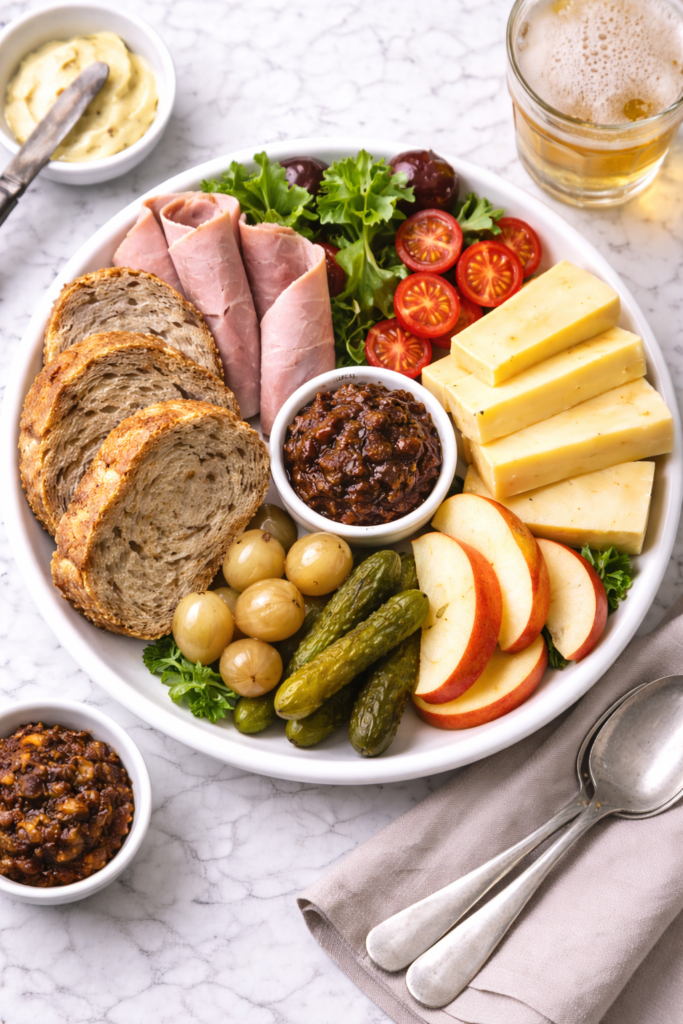
The Ploughman’s Lunch is a classic British cold meal that celebrates simplicity, quality ingredients, and rural tradition. Built around good cheese, crusty bread, and traditional accompaniments, it has long been associated with pubs, countryside lunches, and relaxed outdoor eating. Rather than relying on cooking techniques, this dish focuses on balance, freshness, and careful assembly.
The origins of the Ploughman’s Lunch are closely linked to Britain’s agricultural past, where farm workers needed a filling yet practical midday meal. Cheese, bread, and pickles were easy to transport, required no reheating, and provided enough nourishment for long hours of physical labour. Although the term “Ploughman’s Lunch” became more widely used in the mid-20th century, the components themselves have been part of British food culture for centuries.
At The Recipe Kitchen, this Ploughman’s Lunch recipe honours the traditional UK version while offering flexibility for modern tastes. It is ideal for warm-weather meals, light lunches, or informal gatherings, and proves that some of the most satisfying dishes require no stove at all.
Recipe Overview
Prep Time: 15 minutes
Cook Time: None
Total Time: 15 minutes
Servings: 2
Ingredients
Core Components
- 200 g mature cheddar cheese, sliced or cut into chunks
- 2 thick slices crusty bread (white or wholemeal)
- Butter, softened
Traditional Accompaniments
- 2 tablespoons Branston pickle or chutney
- 1 small apple, sliced
- 1 handful pickled onions
Optional Additions
- Mixed salad leaves
- Sliced ham or cold roast meat
- Cherry tomatoes
- Celery sticks
Step-by-Step Instructions
- Prepare the cheese
Remove the cheese from the refrigerator 15–20 minutes before serving to allow it to reach room temperature. This enhances flavour and texture. - Slice the bread
Cut the bread into thick slices. Butter lightly if desired, keeping the texture rustic rather than overly smooth. - Prepare accompaniments
Slice the apple just before serving to prevent browning. Drain the pickled onions and portion out the pickle or chutney. - Assemble the plate
Arrange the cheese prominently on a serving board or plate. Add the bread alongside, followed by the apple slices, pickles, and any optional items. - Finish and serve
Serve immediately, allowing each person to assemble bites as they wish.
Cooking Tips & Variations
- Cheese choice: Mature cheddar is traditional, but regional British cheeses such as Red Leicester, Stilton, or Wensleydale also work well.
- Bread matters: A well-baked loaf with a crisp crust adds texture and contrast.
- Add protein: Cold roast beef, ham, or pork slices are common pub additions.
- Seasonal fruit: Pears or grapes can replace apples depending on availability.
- Vegetarian focus: Keep the plate plant-forward by adding nuts, salad leaves, or sliced radishes.
What to Serve With a Ploughman’s Lunch
- Sparkling water or apple juice
- Light beer or cider
- Extra bread for sharing
The Ploughman’s Lunch works best as a relaxed, informal meal where diners can eat at their own pace.
Storage & Reheating
- Storage: Store components separately in the refrigerator for up to 2 days.
- Reheating: This dish is served cold and does not require reheating.
- Make-ahead: Cheese and accompaniments can be prepared in advance, but assemble just before serving for freshness.
Frequently Asked Questions
What cheese is traditionally used in a Ploughman’s Lunch?
Mature English cheddar is the most traditional and widely used cheese.
Is a Ploughman’s Lunch always vegetarian?
Traditionally yes, but many modern versions include cold meats as an optional addition.
Can I serve this as a main meal?
Yes. When served with generous portions and a variety of sides, it works well as a light main course.
Final Thoughts
The Ploughman’s Lunch is a perfect example of British food culture at its most straightforward and satisfying. With quality ingredients, thoughtful assembly, and no complicated preparation, it delivers flavour, balance, and tradition in every bite. Whether enjoyed in a pub garden, at home, or as a casual lunch, this classic UK recipe remains timeless, adaptable, and deeply rooted in Britain’s culinary heritage.
Share Your Cooking Experience
Did you change any ingredients? We’d love to hear how it turned out.