
Introduction
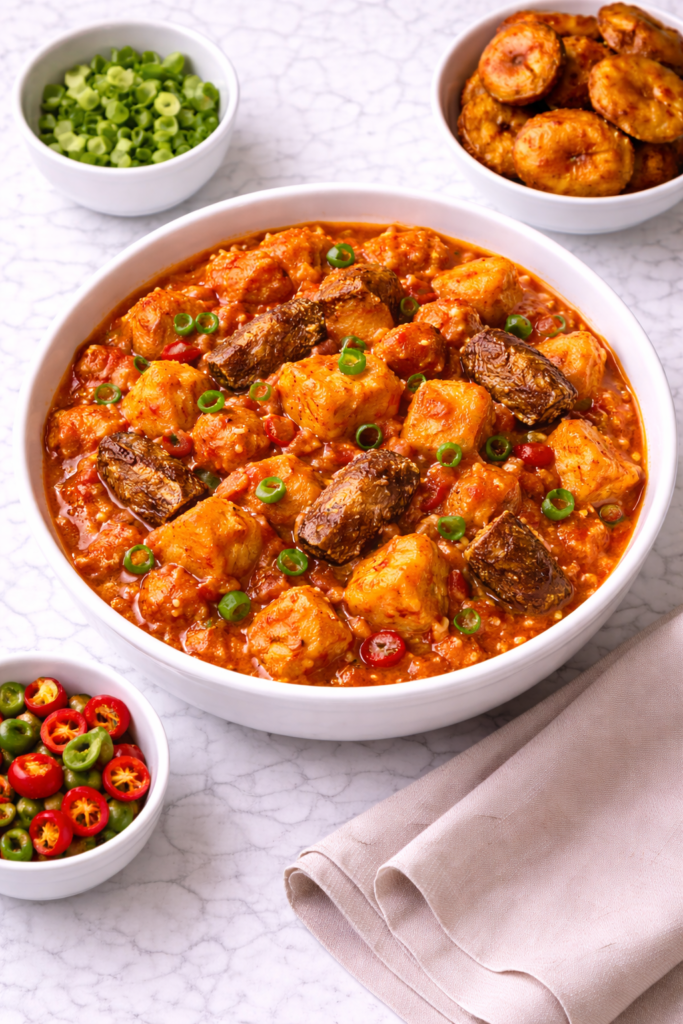
Asaro, also known as Nigerian yam porridge, is a comforting and flavourful dish that holds a special place in Nigerian home cooking. Made primarily from yam cooked in a rich pepper and palm oil sauce, Asaro is soft, hearty, and deeply satisfying. It is enjoyed across Nigeria but is especially popular among the Yoruba people, where it is often prepared as a main meal for lunch or dinner.
Yam has long been a staple crop in Nigeria and is celebrated for its versatility and ability to feed families affordably. Asaro emerged as a practical way to transform yam into a complete one-pot meal by cooking it with peppers, onions, palm oil, and seasoning. Over time, the dish evolved to include optional additions such as fish, meat, or vegetables, depending on region and household preference.
At The Recipe Kitchen, this Asaro recipe follows the authentic Nigerian method. It balances spice, richness, and texture, guiding you step by step to achieve perfectly cooked yam porridge that is creamy yet chunky, just as it is traditionally enjoyed in Nigerian kitchens.
Recipe Overview
Prep Time: 15 minutes
Cook Time: 30 minutes
Total Time: 45 minutes
Servings: 4
Ingredients
For the Yam Porridge
- 1 kg white yam, peeled and cut into medium cubes
- 1 medium onion, chopped
- 1 red bell pepper
- 1 Scotch bonnet pepper (adjust to taste)
- 3 tablespoons palm oil
- 1 teaspoon ground crayfish (optional but traditional)
- 1 stock cube
- Salt, to taste
- 2–3 cups water or light stock
Optional Additions
- Smoked fish or dried fish, cleaned
- Cooked beef, goat meat, or tripe
- Spinach or ugwu leaves, chopped
Step-by-Step Instructions
- Prepare the yam
Peel the yam and cut it into medium-sized cubes. Rinse thoroughly under cold water to remove excess starch. Set aside. - Blend the peppers
Blend the red bell pepper and Scotch bonnet pepper into a smooth or slightly coarse paste, depending on your preference. - Start the base
Place the yam cubes into a medium pot. Add the chopped onions, blended pepper, stock cube, salt, and water. The liquid should just cover the yam. - Cook the yam
Place the pot over medium heat and bring to a boil. Cook for 15–20 minutes, stirring occasionally, until the yam is soft and beginning to break down. - Add palm oil and crayfish
Reduce the heat to medium-low. Add the palm oil and ground crayfish, if using. Stir gently to combine without fully mashing the yam. - Mash lightly
Using a wooden spoon, gently mash some of the yam cubes against the side of the pot. This thickens the porridge while keeping some chunks intact. - Add proteins (if using)
Stir in smoked fish, dried fish, or cooked meat. Allow to simmer for 5–7 minutes so the flavours blend. - Final adjustments
Taste and adjust seasoning with salt or additional pepper if needed. If adding vegetables, stir them in at this stage and cook for 2–3 minutes until wilted. - Rest and serve
Remove from heat and allow the Asaro to rest for a few minutes before serving.
Cooking Tips & Variations
- Yam texture: Avoid cutting the yam too small, as it can dissolve completely during cooking.
- Palm oil colour: Do not overheat the palm oil; add it once the yam is soft to preserve its colour and flavour.
- Spice control: Scotch bonnet pepper adds heat, but it can be reduced or omitted for a milder version.
- Extra richness: Add a small amount of locust beans (iru) for deeper flavour.
- Modern variation: Some versions include tomatoes, but traditional Asaro relies mainly on peppers and palm oil.
What to Serve With Asaro
Asaro is often enjoyed on its own, but it pairs well with:
- Fried plantains (dodo)
- Fried fish
- Grilled or roasted meat
- Fresh pepper sauce
These accompaniments add texture and complement the rich, savoury flavours of the porridge.
Storage & Reheating
- Storage: Store leftovers in an airtight container in the refrigerator for up to 2 days.
- Reheating: Reheat gently on the stovetop or microwave, adding a small amount of water if needed to loosen the texture.
- Freezing: Freezing is not recommended, as yam can become grainy when thawed.
Frequently Asked Questions
Why is my Asaro watery?
This usually means too much water was added at the start. Asaro should be thick and creamy, not soupy.
Can I make Asaro without palm oil?
Palm oil is traditional and provides flavour and colour, but vegetable oil can be used if necessary, though the taste will differ.
Is Asaro the same as yam pottage?
Yes. Asaro and yam pottage refer to the same dish, with the name depending on region and language.
Final Thoughts
Asaro is a true expression of Nigerian comfort food, combining simple ingredients with bold, satisfying flavours. Whether prepared plainly or enriched with fish, meat, or vegetables, it remains a versatile and nourishing meal enjoyed across generations. This authentic Nigerian recipe captures the heart of Asaro as it is cooked in homes every day, making it a valuable addition to any collection of traditional world recipes.


Share Your Cooking Experience
Did you change any ingredients? We’d love to hear how it turned out.