Introduction
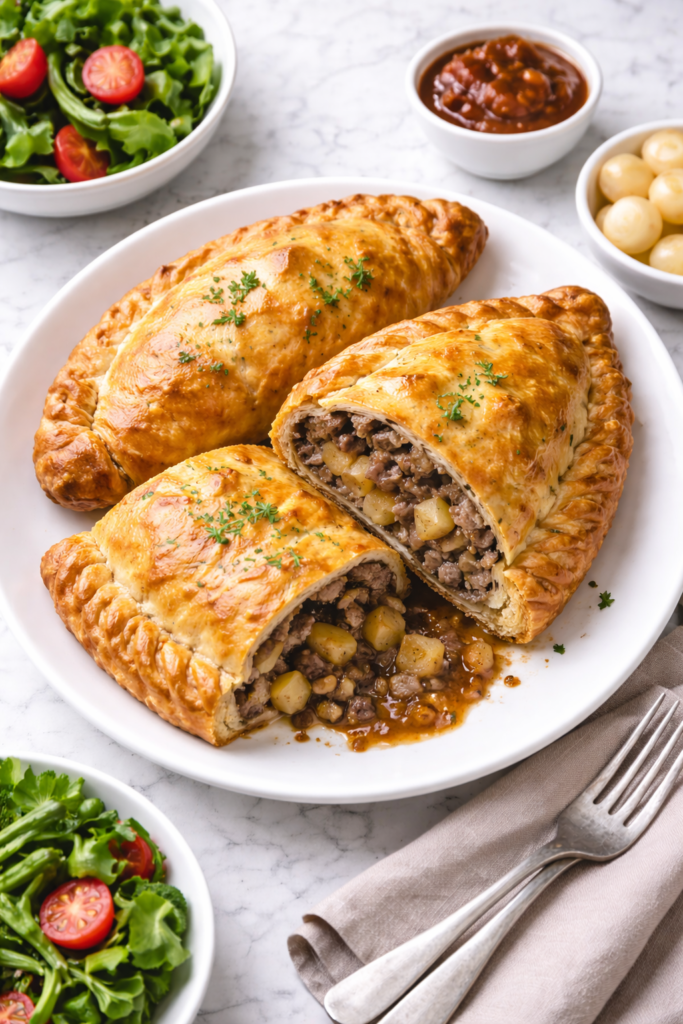
The Cornish pasty is one of the most iconic foods in British culinary history. With its distinctive half-moon shape, crimped edge, and hearty filling of meat and vegetables, it has been associated with Cornwall for centuries. More than just a pastry, the Cornish pasty represents a way of life, rooted in practicality, local produce, and working-class tradition.
Historically, the Cornish pasty was a complete meal for tin miners in Cornwall during the 18th and 19th centuries. Its thick pastry crust made it easy to hold with dirty hands, while the robust filling provided enough sustenance for long days underground. The crimped edge was often discarded, acting as a natural handle. Over time, the pasty became a symbol of Cornish identity and is now protected under UK law as a Traditional Speciality Guaranteed product when made according to strict guidelines.
At The Recipe Kitchen, this Cornish pasty recipe stays true to its authentic roots. It uses the traditional ingredients, simple seasoning, and classic method that define a genuine Cornish pasty, while remaining approachable for home cooks everywhere.
Recipe Overview
Prep Time: 40 minutes
Cook Time: 50 minutes
Total Time: 1 hour 30 minutes
Servings: 4 pasties
Ingredients
For the Pastry
- 500 g plain flour
- 120 g cold unsalted butter, cubed
- 120 g cold lard or vegetable shortening
- 1 teaspoon salt
- 150–180 ml cold water
For the Filling
- 350 g beef skirt or chuck steak, finely diced
- 2 medium potatoes, peeled and finely diced
- 1 small swede (rutabaga), peeled and finely diced
- 1 medium onion, finely chopped
- Salt, to taste
- Black pepper, to taste
- 25 g butter, cut into small cubes
For Assembly
- 1 egg, beaten (for glazing)
Step-by-Step Instructions
- Make the pastry
In a large bowl, combine the flour and salt. Add the cold butter and lard, rubbing them into the flour with your fingertips until the mixture resembles coarse breadcrumbs. Gradually add cold water, mixing gently until a firm dough forms. - Rest the pastry
Turn the dough out onto a clean surface, shape it into a disc, wrap tightly, and refrigerate for at least 30 minutes. Resting helps relax the gluten and makes rolling easier. - Prepare the filling
While the pastry rests, prepare the filling. Dice the beef, potatoes, swede, and onion as finely and evenly as possible to ensure even cooking. Season generously with salt and black pepper. - Preheat the oven
Preheat the oven to 220°C (200°C fan). Line a baking tray with parchment paper. - Roll out the pastry
Divide the chilled pastry into four equal portions. Roll each portion into a circle approximately 20–22 cm in diameter. - Fill the pasties
Spoon a quarter of the filling mixture onto one half of each pastry circle, leaving a clear border around the edge. Dot the filling with small cubes of butter to add moisture and richness. - Seal and crimp
Brush the pastry edges lightly with beaten egg. Fold the pastry over the filling to form a half-moon shape. Press the edges firmly together, then crimp along the edge to seal. - Glaze
Place the pasties on the prepared baking tray. Brush the tops with beaten egg to give a golden finish. - Bake
Bake in the hot oven for 20 minutes, then reduce the temperature to 180°C (160°C fan) and continue baking for 30 minutes, until the pastry is golden brown and the filling is cooked through. - Cool slightly before serving
Remove from the oven and allow the pasties to rest for 10 minutes before serving.
Cooking Tips & Variations
- Cut ingredients evenly: Finely and evenly diced filling ensures everything cooks at the same rate.
- Do not overfill: Too much filling can cause the pastry to split during baking.
- Traditional seasoning: Authentic Cornish pasties use only salt and pepper. Avoid herbs if aiming for a classic result.
- Pastry strength: The pastry should be firm rather than flaky, allowing it to hold the filling securely.
- Mini pasties: This recipe can be adapted to make smaller pasties for parties or packed lunches.
What to Serve With Cornish Pasty
- Simple green salad
- Pickled onions or chutney
- Steamed vegetables
- A mug of tea for a traditional pairing
Cornish pasties are complete meals on their own, so light accompaniments work best.
Storage & Reheating
- Storage: Store cooled pasties in an airtight container in the refrigerator for up to 3 days.
- Freezing: Unbaked pasties freeze well for up to 2 months. Bake from frozen, adding extra cooking time.
- Reheating: Reheat baked pasties in the oven at 170°C until heated through. Avoid microwaving, as it can soften the pastry.
Frequently Asked Questions
What meat is traditionally used in a Cornish pasty?
Skirt steak is the traditional choice, but chuck steak is a suitable alternative.
Why is the pasty crimped on the side?
Side crimping is a defining feature of a traditional Cornish pasty and helps seal the filling securely.
Can I add carrots or peas to the filling?
Authentic Cornish pasties do not include carrots or peas. Adding them would make it a variation rather than a traditional version.
Final Thoughts
The Cornish pasty is a timeless example of British food heritage. Simple, filling, and deeply satisfying, it showcases how humble ingredients can create something enduring and meaningful. By following this traditional method, you can recreate an authentic Cornish pasty at home, honouring a recipe that has fed generations and continues to be loved across the UK and beyond.