
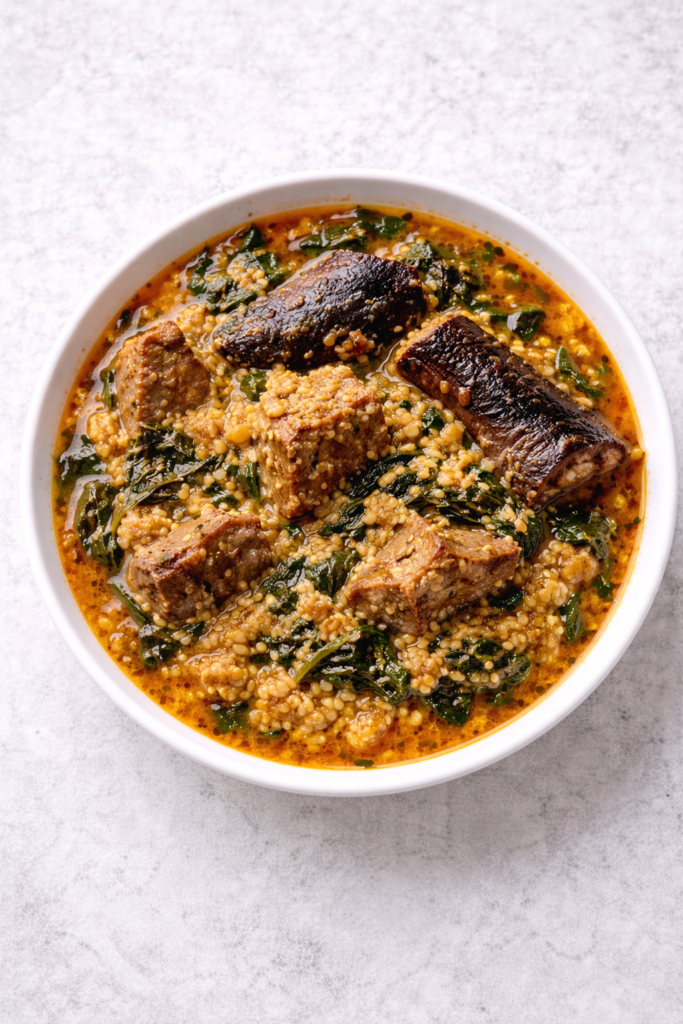
Egusi soup is one of the most beloved dishes in Nigerian cuisine and a cornerstone of West African cooking. Made from ground melon seeds, egusi soup is known for its rich, nutty flavour and thick, hearty texture. It is traditionally enjoyed with swallow foods such as fufu, pounded yam, eba, or amala, making it a filling and deeply satisfying meal.
Across Nigeria, egusi soup varies slightly by region and household, with differences in proteins, vegetables, and spice levels. Despite these variations, the core ingredients remain the same, resulting in a comforting dish that is both culturally significant and widely enjoyed at family meals and celebrations.
This authentic Soup is easy to prepare and it sure follows a classic Nigerian method that delivers bold flavour while remaining easy to prepare at home.
Egusi soup is one of the most recognised and widely prepared Nigerian soups, enjoyed across Yoruba, Igbo, and other West African communities. Though ingredients and techniques may vary slightly by region, the rich melon-seed base and hearty texture remain its defining characteristics. This version reflects a traditional home-style preparation that balances depth of flavour with clear, step-by-step simplicity.
Egusi Soup is traditionally served with Pounded Yam or Fufu, and it also pairs well with vegetable soups such as Efo Riro.
Why This Egusi Soup Recipe Works
- Uses traditional ground melon seeds for authentic flavour
- Balanced seasoning without overpowering bitterness
- Clear layering of ingredients for depth
- Perfect consistency – not too thick, not watery
- Adaptable for different proteins and vegetables
Recipe Overview
Prep Time: 15 minutes
Cook Time: 40 minutes
Total Time: 55 minutes
Servings: 6
Ingredients
Egusi Soup Base
2 cups ground egusi (melon seeds)
½ cup palm oil
1 medium onion, finely chopped
3 cups meat or fish stock
1 cup water (as needed)
Proteins (choose a mix)
Beef (cut into chunks)
Goat meat
Smoked fish
Stockfish
Vegetables & Seasoning
2 cups spinach or bitterleaf (washed and chopped)
2 tablespoons ground crayfish
1–2 seasoning cubes
Salt to taste
Ground pepper or blended pepper mix (to taste)
Step-by-Step Instructions
Cook the proteins.
Place meat in a pot with onions, seasoning cubes, and salt. Cook until tender, reserving the stock.
Prepare the egusi paste.
Mix the ground egusi with a small amount of water to form a thick paste.
Heat the palm oil.
Warm palm oil in a pot over medium heat, allowing it to melt gently without overheating.
Cook the egusi.
Add spoonfuls of the egusi paste to the oil. Fry gently for several minutes, stirring carefully until it thickens.
Add stock and proteins.
Pour in the reserved stock and water as needed. Add cooked meat, smoked fish, and stockfish.
Season the soup.
Add crayfish, pepper, seasoning cubes, and salt. Stir well and simmer for 10–15 minutes.
Add vegetables.
Stir in spinach or bitterleaf and cook for 3–5 minutes until just tender.
Adjust and rest.
Taste and adjust seasoning. Allow the soup to rest briefly before serving.
Cooking Tips & Variations
- Frying the egusi properly enhances flavour and prevents lumps.
- Bitterleaf gives a more traditional taste, while spinach is a milder alternative.
- For vegetarian egusi, omit meat and use mushrooms or tofu with vegetable stock.
- Adjust thickness by adding small amounts of water or stock.
How to Prevent Bitter Egusi Soup
Bitter flavour usually comes from overcooking leafy vegetables or burning the melon seed paste. Always cook on moderate heat and stir consistently after adding ground egusi.
How to Thicken Egusi Soup Properly
If your soup is too thin, allow it to simmer uncovered for a few extra minutes. The ground melon naturally thickens as it cooks.
Regional Variations
In some regions, spinach is used instead of bitterleaf. Others add stockfish or smoked fish for deeper flavour. Both approaches are authentic and widely accepted.
What to Serve With Egusi Soup
Egusi soup is traditionally enjoyed with Eba, a cassava-based swallow that perfectly absorbs the rich sauce. It is also commonly served with Pounded Yam for a softer texture, or with Fufu depending on regional preference. For variety, you may also explore other Nigerian soups such as Banga Soup or Efo Riro, as well as three others, notably:
- Fufu
- Amala
- Semolina swallow
- Egusi soup pairs best with smooth, stretchy swallow foods.
Storage & Reheating
Egusi soup stores well in the refrigerator for up to 3 days. Reheat gently on the stovetop, adding a splash of water if needed. It can also be frozen for up to 2 months.
Frequently Asked Questions
Frequently Asked Questions
What is egusi made from?
Egusi is made from ground melon seeds, which give the soup its rich, nutty flavour.
Can I make egusi soup without palm oil?
Palm oil is traditional and recommended, but vegetable oil can be used in small amounts if needed.
Why is my egusi soup lumpy?
Lumps usually occur if the egusi is not stirred properly during frying. Stir gently and consistently. Having said that, some individuals prefer to make egusi with lumps, so as to enjoy its richness to the fullest.
Can Egusi Soup Be Frozen?
Yes. Egusi soup freezes well for up to 3 months. Store in airtight containers and thaw overnight in the refrigerator before reheating gently.
Final Thoughts
This authentic Nigerian egusi soup recipe delivers deep flavour, comforting texture, and cultural richness in every spoonful. Whether served for a family meal or special occasion, egusi soup remains one of Nigeria’s most cherished dishes.
As one of Nigeria’s most iconic soups, mastering Egusi is an essential step in understanding traditional West African cuisine.