Introduction
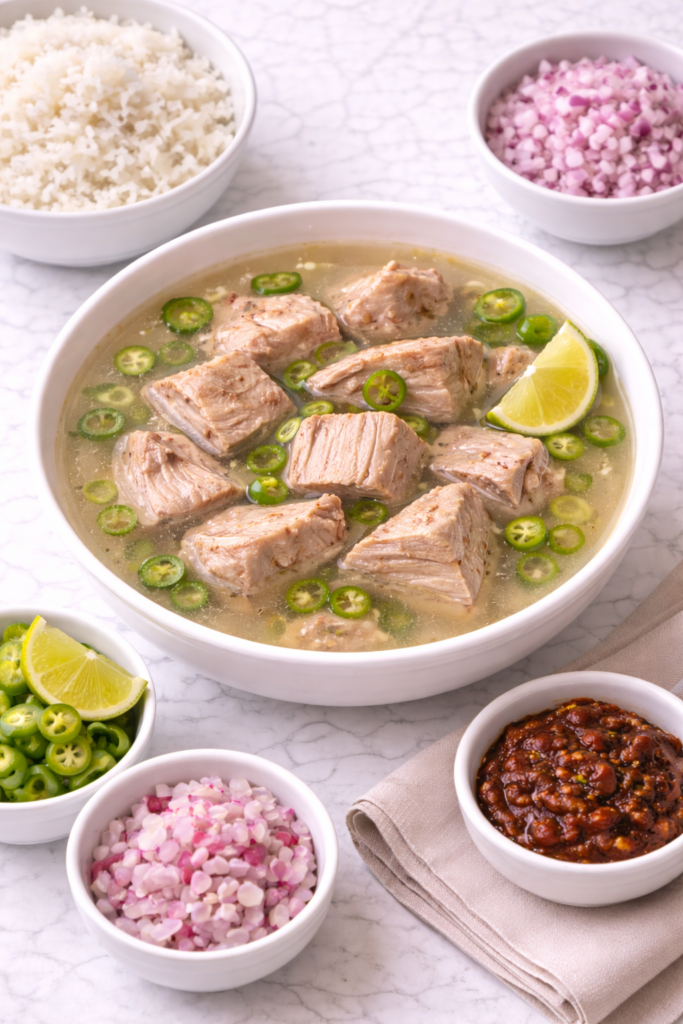
Garudhiya is one of the most iconic and cherished dishes in Maldivian cuisine. Simple in appearance yet deeply nourishing, this clear tuna broth forms the foundation of everyday meals across the Maldives. Served with rice and a selection of condiments, garudhiya reflects the island nation’s close relationship with the sea and its long-standing reliance on fresh tuna as a primary source of protein.
The origins of garudhiya are inseparable from Maldivian fishing culture. For centuries, pole-and-line tuna fishing has shaped both the economy and diet of the Maldives. Fishermen returning with their daily catch would prepare garudhiya almost immediately, using freshly caught skipjack tuna, lightly seasoned and gently simmered to preserve its clean, natural flavour. Over time, this broth became a symbol of home cooking, hospitality, and tradition.
At The Recipe Kitchen, this garudhiya recipe honours the authentic Maldivian method. With minimal ingredients and careful technique, it produces a clear, aromatic broth that highlights the quality of the fish. Whether served as a comforting meal or as an introduction to Maldivian cuisine, garudhiya offers a true taste of island life.
Part of our complete Maldivian Cuisine Guide.
Recipe Overview
Prep Time: 10 minutes
Cook Time: 30 minutes
Total Time: 40 minutes
Servings: 4
Ingredients
For the Broth
- 700 g fresh skipjack tuna or yellowfin tuna, cut into large chunks
- 1.5 litres water
- 1 teaspoon salt (adjust to taste)
Traditional Accompaniments (Served Separately)
- Cooked white rice
- Lime wedges
- Finely sliced onion
- Fresh green chillies, sliced
- Maldive fish flakes or dried tuna (optional)
Step-by-Step Instructions
- Prepare the fish
Rinse the tuna pieces thoroughly under cold water. Remove any bloodlines or dark flesh, as these can make the broth cloudy and overly strong. - Bring water to a boil
Pour the water into a large pot and place over medium-high heat. Allow it to come to a gentle boil. - Add the tuna
Carefully place the tuna pieces into the boiling water. Reduce the heat slightly to maintain a steady simmer. - Season lightly
Add the salt to the pot. Do not add spices or aromatics at this stage, as traditional garudhiya relies on the pure flavour of tuna. - Simmer gently
Allow the broth to simmer uncovered for 25–30 minutes. Skim off any foam that rises to the surface to keep the broth clear. - Check doneness
The tuna should be fully cooked and tender, and the broth should appear clear with a pale golden hue. - Adjust seasoning
Taste the broth and adjust salt if necessary. Remove from heat. - Serve immediately
Ladle the hot broth and tuna into bowls and serve with rice and traditional accompaniments on the side.
Cooking Tips & Variations
- Fresh fish is essential: The quality of the tuna determines the flavour of the broth. Fresh, firm fish produces the best results.
- Keep the broth clear: Avoid vigorous boiling, as this clouds the liquid and toughens the fish.
- Minimal seasoning: Garudhiya is intentionally mild. Seasonings are added at the table rather than in the pot.
- Alternative fish: While skipjack tuna is traditional, yellowfin tuna can be used when necessary.
- Modern variation: Some households add ginger or curry leaves, though this departs from the classic version.
What to Serve With Garudhiya
Garudhiya is traditionally served as a complete meal with:
- Steamed white rice
- Lime wedges for squeezing into the broth
- Sliced onions and green chillies
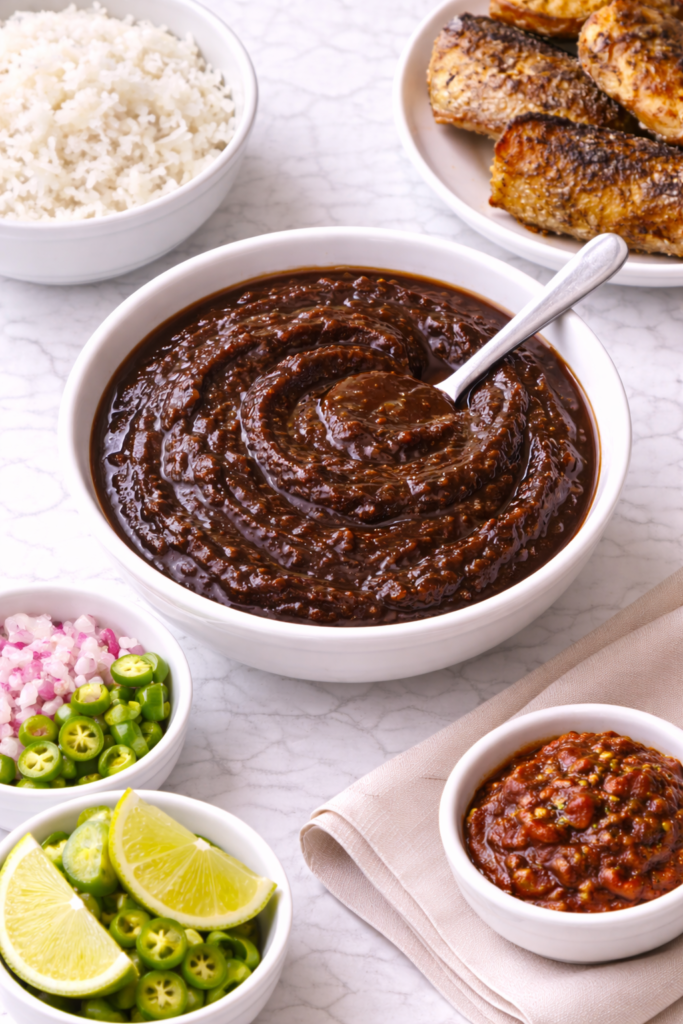
- Rihaakuru (thick fermented fish paste)
- Lonumirus (chilli and onion sambal)
These accompaniments allow diners to customise flavour and heat according to personal preference.
Storage & Reheating
- Storage: Store leftover garudhiya in an airtight container in the refrigerator for up to 2 days.
- Reheating: Reheat gently on the stovetop over low heat. Avoid boiling to preserve flavour and texture.
- Freezing: Freezing is possible, but fresh garudhiya always delivers the best taste.
Frequently Asked Questions
Why is my garudhiya cloudy?
This usually happens if the broth is boiled too vigorously or the fish was not properly cleaned.
Can I make garudhiya without tuna?
Traditionally, garudhiya is always made with tuna. Other fish will change the flavour and authenticity.
Is garudhiya spicy?
No. The broth itself is mild. Heat is added at the table using chillies and sambal.
Final Thoughts
Garudhiya is more than just a soup; it is a reflection of Maldivian heritage, simplicity, and respect for natural ingredients. With only fish, water, and salt, it showcases how careful technique and quality produce extraordinary flavour. Served with rice and vibrant condiments, this traditional Maldivian recipe offers a nourishing, authentic experience that brings the essence of island cooking to your table.