Huni Roshi – Traditional Maldivian Coconut Flatbread
Huni Roshi is a soft, lightly sweet coconut flatbread that forms the backbone of many Maldivian breakfasts. If you’ve ever seen Mas Huni served traditionally, it is almost always paired with warm, freshly cooked Huni Roshi. Together, they form one of the most iconic breakfast combinations in the Maldives.
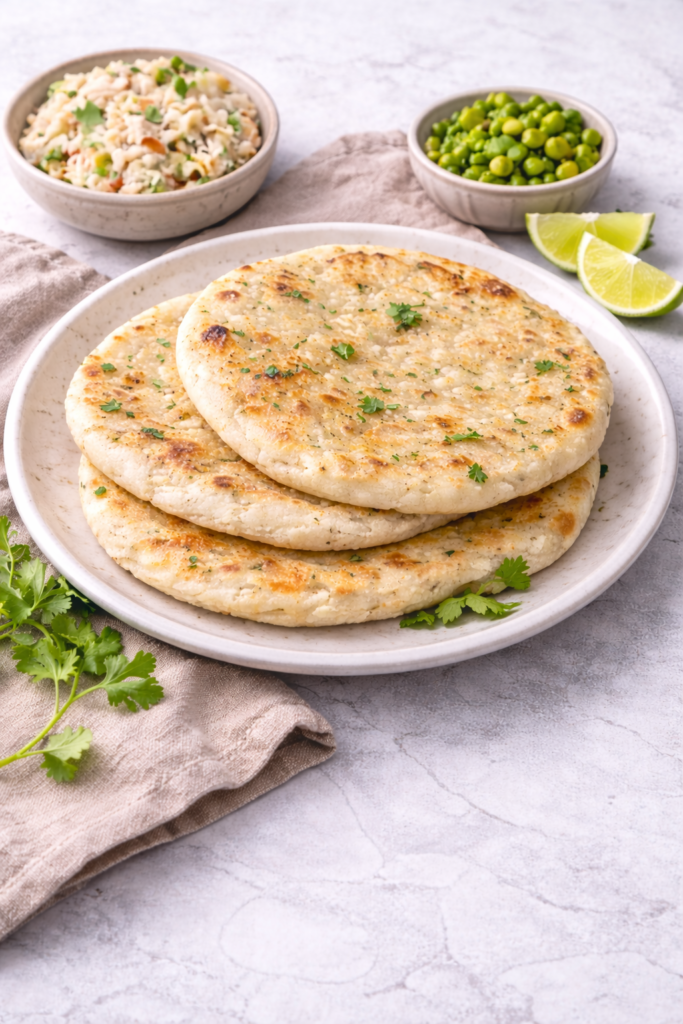
Unlike plain flatbread, Huni Roshi incorporates freshly grated coconut into the dough, giving it a subtle sweetness, delicate chew, and fragrant aroma. It is cooked on a flat griddle until lightly golden with faint brown spots and served warm.
While it may look simple, mastering Huni Roshi allows you to create a truly authentic Maldivian breakfast experience.
Part of our Complete Maldivian Cuisine Guide
The Cultural Importance of Huni Roshi
In Maldivian households, breakfast is often hearty but uncomplicated. Fresh tuna mixed with coconut (Mas Huni), black tea, and warm roshi form a balanced, nourishing start to the day.
Coconut is one of the most abundant ingredients in the Maldives. Every part of the coconut tree is used — and grated coconut features in both savoury and sweet dishes. Huni Roshi showcases coconut in one of its most comforting forms.
It is also:
- Served during Ramadan suhoor
- Eaten alongside curries for lunch
- Used as a scoop for sauces and broths
- Made fresh daily in many homes
Adding this to your Maldivian cluster strengthens your internal linking — especially to Mas Huni and Lonumirus.
Why You’ll Love This Recipe
- Soft, slightly sweet, and aromatic
- Quick and simple ingredients
- Perfect pairing for curries and tuna dishes
- Freezer-friendly
- Traditional and authentic
Ingredients
- 2 cups all-purpose flour
- 1 cup freshly grated coconut (or desiccated coconut)
- ½ teaspoon salt
- 1 teaspoon sugar (optional)
- 1 tablespoon oil
- ¾ cup warm water (adjust as needed)
Step-by-Step Instructions
1. Prepare the Dough
In a large bowl, combine flour, grated coconut, salt, and sugar.
Add oil and mix with fingers until evenly distributed.
Gradually pour in warm water while mixing until a soft dough forms.
Knead for 5–7 minutes until smooth and pliable.
Cover with a damp cloth and let rest for 20–30 minutes.
Resting relaxes the gluten and ensures soft roshi.
2. Divide and Roll
Divide dough into equal balls (about 6–8 pieces).
Lightly flour your surface and roll each ball into a thin round (about 6–7 inches wide).
Do not roll too thin — moderate thickness keeps it soft.
3. Cook the Roshi
Heat a flat pan or tawa over medium heat.
Place one roshi on the pan and cook for 1–2 minutes until bubbles form.
Flip and cook the other side until lightly golden.
Brush lightly with oil if desired.
Stack and cover with a cloth to keep warm.
Tips for Perfect Huni Roshi
- Use fresh coconut if possible for best flavour.
- Do not overcook — it should remain soft.
- Resting the dough improves texture significantly.
- Store wrapped in cloth to prevent drying.
What to Serve with Huni Roshi
- Mas Huni
- Garudhiya
- Dhon Riha
- Farumas Riha
Internal linking opportunity: mention and link back to your Mas Huni and Garudhiya posts.
Storage
Wrap tightly and refrigerate for up to 2 days.
Freeze layered with parchment paper for up to 1 month.
Reheat on a dry pan.
Final Thoughts
Huni Roshi is simple but foundational. It anchors many Maldivian meals and gives your readers the tools to create complete, authentic spreads rather than isolated dishes.