
Introduction
Nigerian cuisine is widely celebrated for its bold flavours, rich textures, and deeply rooted culinary traditions. At the heart of this cuisine are its soups — vibrant, aromatic, and layered dishes that form the foundation of everyday meals and festive celebrations alike. Across Nigeria’s diverse regions and ethnic groups, soups are more than just accompaniments; they are central to cultural identity, family gatherings, and communal dining.
Unlike Western-style soups that are often light starters, Nigerian soups are typically thick, hearty, and intensely flavourful. They are commonly served with “swallows” such as pounded yam, eba, or fufu, and are built using staple ingredients like palm oil, melon seeds, leafy vegetables, seafood, meats, and indigenous spices. Each soup carries its own story, regional influence, and cooking technique.
In this complete guide, you’ll discover the most popular and traditional Nigerian soups, along with insights into their ingredients, flavor profiles, and how they are traditionally served.
What Makes Nigerian Soups Unique?
Rich Bases
Many Nigerian soups are built around distinctive bases:
- Melon seeds (egusi)
- Palm nut extract (banga)
- Ground ogbono seeds
- Fresh leafy vegetables
- Pepper-based stews and sauces
These bases create thick, satisfying textures that are unlike lighter broths found in many other cuisines.
Indigenous Spices
Spices such as:
- Calabash nutmeg
- Uda pods
- Uziza seeds
- Alligator pepper
add depth and aroma that define authentic Nigerian cooking.
Pairing with Swallows
Nigerian soups are traditionally eaten with swallows including:
- Pounded yam
- Eba (garri)
- Fufu
- Semolina
- Amala
The swallow acts as both utensil and complement, making the meal interactive and communal.
Most Popular Traditional Nigerian Soups
Egusi Soup
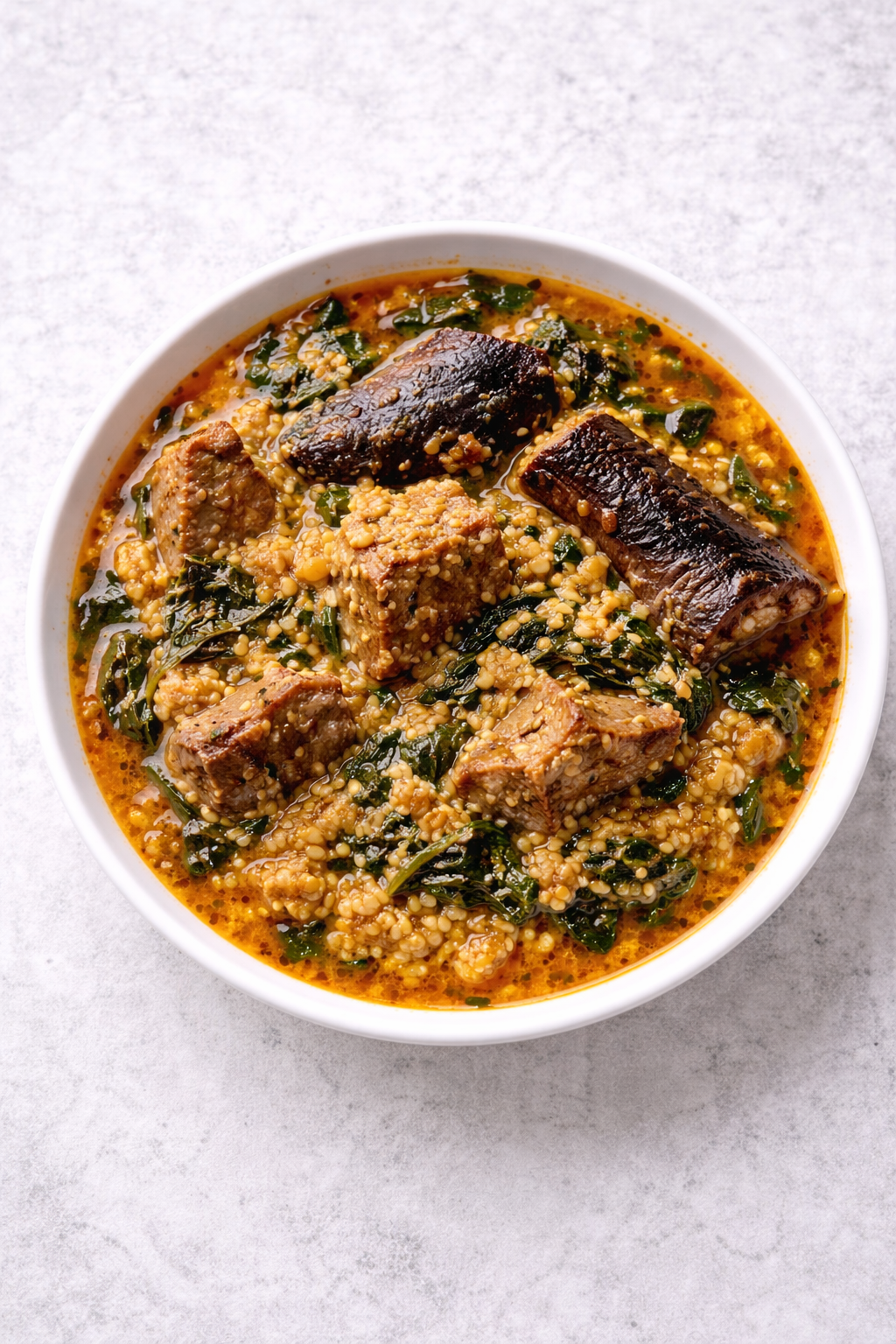
Egusi soup is made from ground melon seeds and cooked with leafy vegetables, palm oil, meats, and seafood. It is thick, nutty, and one of the most internationally recognised Nigerian soups.
A rich and hearty melon seed soup thickened with ground egusi and cooked with leafy vegetables, meat, and aromatic spices.
Read the full Egusi Soup recipe here Egusi Soup Recipe (Authentic Nigerian Melon Seed Soup)
Best served with:
Pounded yam, eba, or fufu.
Ogbono Soup
Ogbono soup uses ground wild mango seeds that create a signature draw or stretchy texture. It is rich, smooth, and deeply satisfying.
Best served with:
Eba or semolina.
Banga Soup
Originating from the Niger Delta, Banga soup is made from palm nut extract and seasoned with indigenous spices. It has a distinct reddish color and a bold, aromatic profile.
A deeply flavoured palm nut soup from the Niger Delta region, rich in spices and traditionally served with starch or pounded yam.
Read the full Banga Soup recipe here. Banga Soup (Nigerian Palm Nut Soup) – Authentic Delta-Style Recipe
Best served with:
Starch or pounded yam.
Efo Riro
Efo Riro is a Yoruba vegetable soup prepared with spinach or other leafy greens, peppers, tomatoes, and assorted meats.
Read the full Efo Riro recipe here. Efo Riro Vegetable Stew Recipe (Authentic Nigerian Spinach Stew)
Best served with:
Pounded yam or amala.
Okra Soup
Okra soup is known for its slightly slippery texture and light consistency. It is often cooked with seafood, meats, and palm oil.
A classic draw soup made with fresh okra, tomatoes, and protein, known for its silky texture.
Read the full Okra Soup recipe here. Okra Soup Recipe Nigeria – Authentic Nigerian Okro Soup
Best served with:
Eba or fufu.
Ayamase (Ofada Sauce)
Although technically a pepper sauce, Ayamase is often grouped among soups due to its rich, thick texture and bold flavour.
A spicy green pepper sauce traditionally paired with Ofada rice and assorted meats.
Read the full Ayamase recipe here. Ayamase (Ofada Sauce) – Authentic Nigerian Green Pepper Sauce
Best served with:
Ofada rice.
Nigerian Pepper Soup Variations
Pepper soup is lighter and broth-based, but it remains one of Nigeria’s most beloved dishes.
Goat Meat Pepper Soup
A spicy and aromatic broth featuring tender goat meat and traditional pepper soup spices. Its bold. spicy and also deeply aromatic in nature
Read the full Goat Meat Pepper Soup recipe here. Nigerian Goat Meat Pepper Soup – Authentic Spicy Pepper Soup Recipe
Chicken Pepper Soup
A lighter variation made with chicken, infused with warming spices and fresh herbs.
Read the full Chicken Pepper Soup recipe here. Nigerian Chicken Pepper Soup – Authentic Spicy Chicken Pepper Soup Recipe
Catfish Pepper Soup
Restaurant-style favourite with delicate fish flavour. It is a bold and flavourful fish-based broth popular in riverside regions of Nigeria.
Read the full Catfish Pepper Soup recipe here. Nigerian Catfish Pepper Soup – Authentic Spicy Catfish Pepper Soup Recipe
How to Choose the Right Nigerian Soup
If you prefer thick and hearty:
Choose egusi or ogbono.
If you enjoy vegetable-forward dishes:
Choose efo riro.
If you love bold palm flavours:
Choose banga.
If you want something light and spicy:
Choose pepper soup.
If you prefer rice-based pairings:
Choose ayamase.
Storage & Meal Planning
Most Nigerian soups:
- Store well in the refrigerator for 3–4 days
- Freeze beautifully for up to 2 months
- Often taste better the next day as flavours deepen
Preparing soups in larger batches is common practice in Nigerian households.
Frequently Asked Questions
What is the most popular Nigerian soup?
Egusi and pepper soup are among the most widely recognised.
Are Nigerian soups very spicy?
Many are moderately to highly spicy, but heat levels can be adjusted.
What is a swallow?
Swallow refers to starchy accompaniments used to scoop up soups.
Final Thoughts
Nigerian soups are the backbone of one of Africa’s most dynamic and flavourful cuisines. From thick melon-based stews to fragrant palm nut soups and spicy broths, each dish reflects the country’s cultural richness and regional diversity.
Exploring these traditional recipes not only introduces bold flavours to your kitchen but also preserves culinary heritage through authentic preparation methods.
As you build your Nigerian recipe collection, this guide serves as a central hub connecting the most iconic soups in the cuisine — strengthening your understanding of their differences while celebrating their shared roots.