Introduction
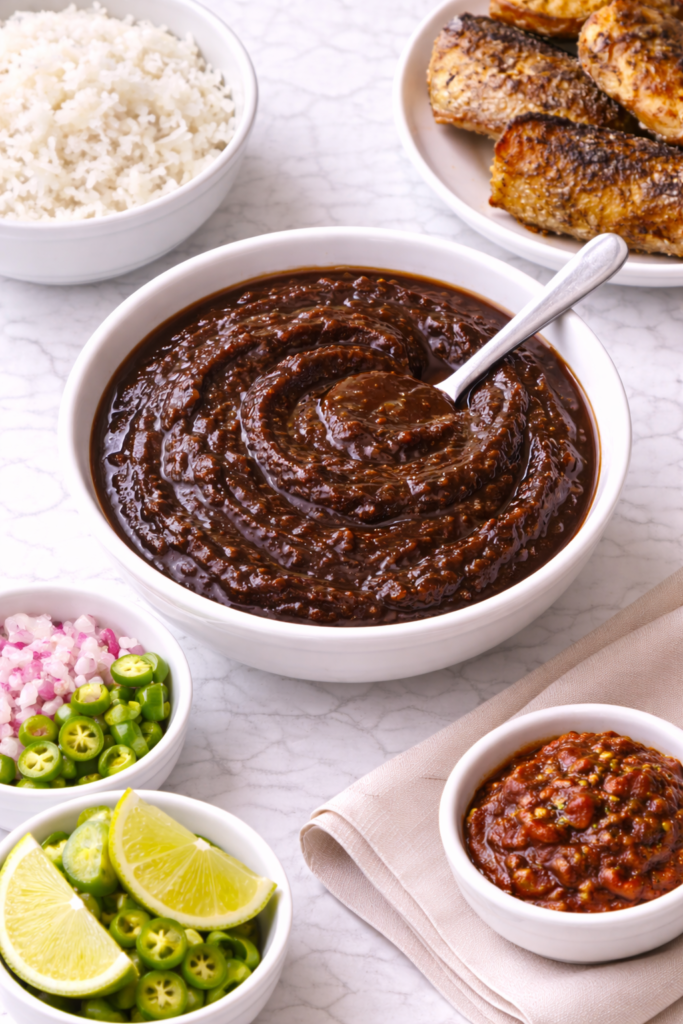
Rihaakuru is one of the most distinctive and culturally important ingredients in Maldivian cuisine. Thick, dark, and intensely savoury, this concentrated fish paste is made by slowly reducing tuna broth until it reaches a rich, syrup-like consistency. Used as a condiment, seasoning, and flavour base, rihaakuru embodies the Maldivian philosophy of preserving the harvest of the sea and extracting maximum nourishment from every part of the catch.
For centuries, the Maldives has relied on tuna fishing as the backbone of its food system. In traditional households, nothing was wasted. After preparing garudhiya, the clear tuna broth, the remaining liquid would be simmered for hours until it thickened into rihaakuru. This process not only preserved the fish flavour for long-term use but also created an ingredient with extraordinary depth and complexity. Rihaakuru became essential in everyday meals, from breakfast dishes to soups, curries, and sambals.
At The Recipe Kitchen, this rihaakuru recipe follows the authentic Maldivian method. It uses patience, careful heat control, and simple ingredients to produce a true traditional fish paste that captures the essence of Maldivian cooking and offers a rare glimpse into one of the world’s most unique culinary traditions.
Recipe Overview
Prep Time: 10 minutes
Cook Time: 3–4 hours
Total Time: 3–4 hours 10 minutes
Servings: About 1½ cups (condiment quantity)
Ingredients
For the Fish Broth Base
- 1 kg fresh skipjack tuna or yellowfin tuna, cut into chunks
- 2 litres water
- 1 teaspoon salt
For Reducing into Rihaakuru
- Reserved tuna broth from cooking
- Additional salt, to taste
Step-by-Step Instructions
- Prepare the tuna
Rinse the tuna thoroughly under cold water. Remove dark bloodlines and any remaining skin or bones. Cut the fish into large chunks. - Cook the fish broth
Place the tuna into a large pot and add the water and salt. Bring to a gentle boil over medium heat, then reduce to a steady simmer. Cook for 30–40 minutes until the tuna is fully cooked and the broth is well flavoured. - Remove the fish
Using a slotted spoon, remove the cooked tuna pieces and set them aside for other dishes. Strain the broth through a fine sieve to remove any solids. Return the clear broth to the pot. - Begin the reduction
Place the pot back over medium heat and bring the broth to a gentle boil. Reduce the heat to maintain a steady simmer. Leave the pot uncovered. - Simmer slowly
Allow the broth to reduce gradually, stirring occasionally to prevent sticking. Over time, the liquid will darken in colour and thicken as water evaporates and the natural fish oils concentrate. - Stir more frequently
As the liquid thickens, stir more often to prevent burning. The mixture will change from a thin broth to a glossy, dark syrup. - Adjust seasoning
Taste and add a small amount of salt if needed. Rihaakuru should be savoury but not overly salty, as it is used sparingly. - Finish the paste
Continue simmering until the mixture reaches a thick, pourable paste that coats the back of a spoon. This usually takes 3 to 4 hours depending on heat and quantity. - Cool and store
Remove from heat and allow to cool completely. Transfer to a clean glass jar or airtight container.
Cooking Tips & Variations
- Low and slow is essential: Rushing the reduction will scorch the paste and ruin the flavour. Gentle heat produces the best result.
- Stir carefully near the end: The thick paste can burn easily in the final stage, so stay close to the pot.
- Colour guide: Rihaakuru should be deep brown, glossy, and smooth, not black or grainy.
- Texture preference: Some households prefer a thick syrup, others a firmer paste. Adjust final reduction time accordingly.
- Flavoured version: A small amount of chilli or curry leaf can be added during reduction for a modern twist, though traditional rihaakuru is unflavoured.
What to Serve With Rihaakuru
Rihaakuru is rarely eaten alone and is traditionally used with:
- Steamed white rice
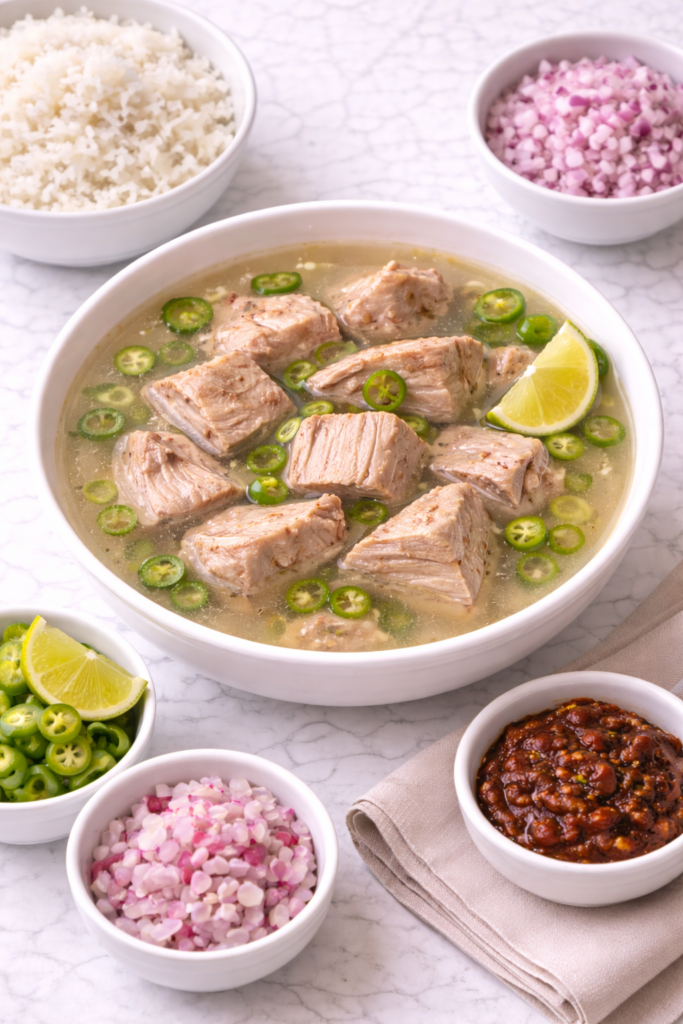
- Garudhiya (tuna broth)
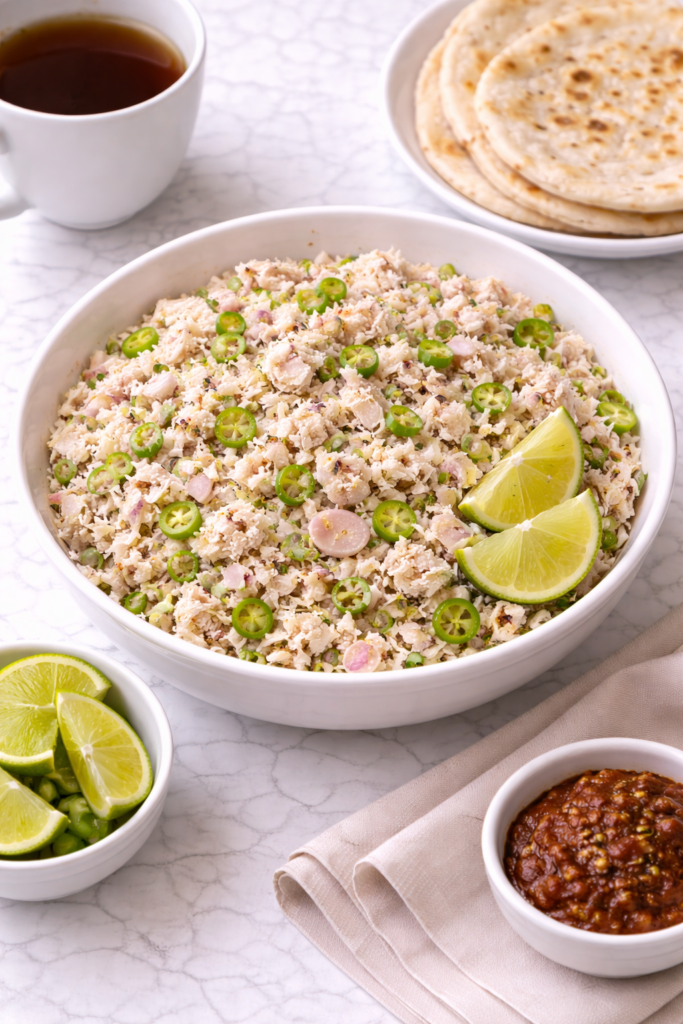
- Mas Huni (tuna and coconut salad)
- Lonumirus (chilli and onion sambal)
- Fried fish or grilled fish
It can also be stirred into soups, curries, and sauces as a seasoning.
Storage & Reheating
- Storage: Store rihaakuru in a clean, airtight glass jar in the refrigerator for up to 2 months.
- Shelf life: Traditional rihaakuru keeps well due to its concentration, but refrigeration ensures freshness and safety.
- Reheating: Gently warm small portions if needed, but it is usually used directly without heating.
- Freezing: Freezing is possible, but not necessary if stored properly in the refrigerator.
Frequently Asked Questions
What does rihaakuru taste like?
Rihaakuru is intensely savoury, rich, and slightly sweet from natural fish oils, similar in depth to anchovy paste or fish sauce but thicker and more complex.
Can I make rihaakuru without fresh tuna?
Traditionally, fresh tuna is essential. Using canned fish or stock will not produce authentic flavour or texture.
How is rihaakuru used in cooking?
It is used sparingly as a condiment, seasoning, or flavour enhancer rather than a main ingredient.
Final Thoughts
Rihaakuru is one of the most remarkable ingredients in Maldivian cuisine, representing patience, resourcefulness, and respect for the sea. Through slow reduction and careful technique, simple tuna broth is transformed into a powerful flavour concentrate that enriches countless dishes. This authentic Maldivian recipe preserves an ancient culinary tradition and offers a rare opportunity to experience the true depth of island cooking, making it a valuable addition to any collection of world recipes.