Introduction
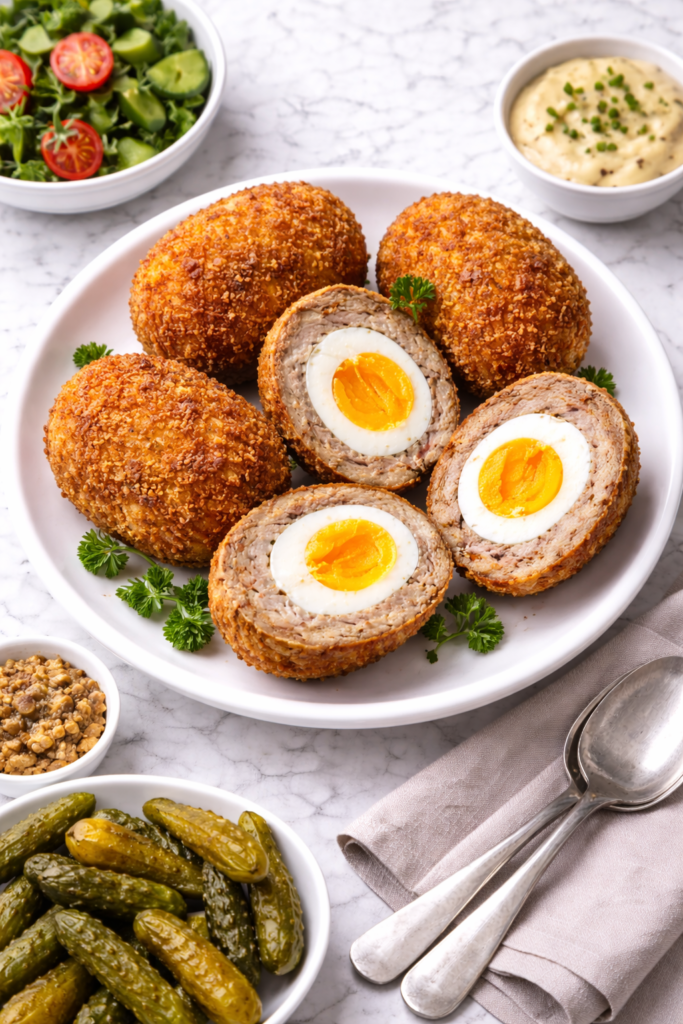
Scotch eggs are one of Britain’s most recognisable and enduring savoury snacks. Consisting of a soft- or hard-boiled egg wrapped in seasoned sausage meat, coated in breadcrumbs, and fried until golden, they are enjoyed across the UK in pubs, picnic baskets, and home kitchens. Crisp on the outside and rich within, scotch eggs strike a balance between simplicity and indulgence.
The origins of scotch eggs are often linked to 18th-century London, with Fortnum & Mason commonly credited for popularising an early version as a portable travel food. Over time, the recipe evolved into the deep-fried version most people recognise today. Despite the name, scotch eggs are firmly rooted in English food culture rather than Scottish cuisine, though they are now enjoyed nationwide.
At The Recipe Kitchen, this scotch egg recipe focuses on authenticity and technique. From achieving the perfect egg centre to creating a well-seasoned sausage coating and crisp breadcrumb crust, this guide walks you through every step to produce classic, pub-quality scotch eggs at home.
Recipe Overview
Prep Time: 25 minutes
Cook Time: 10 minutes
Total Time: 35 minutes
Servings: 4 scotch eggs
Ingredients
For the Eggs
- 4 large eggs
For the Sausage Coating
- 400 g pork sausage meat
- 1 teaspoon Dijon mustard
- ½ teaspoon dried sage or thyme
- Salt, to taste
- Black pepper, to taste
For the Coating
- 50 g plain flour
- 1 egg, beaten
- 80 g breadcrumbs (panko or fine breadcrumbs)
For Frying
- Vegetable oil, for deep frying
Step-by-Step Instructions
- Boil the eggs
Bring a saucepan of water to a gentle boil. Carefully lower in the eggs and cook for 6 minutes for a soft centre or 8–9 minutes for fully set yolks. Transfer immediately to cold water and allow to cool completely. - Peel the eggs
Once cooled, gently peel the eggs and pat them dry. Set aside. - Prepare the sausage meat
Place the sausage meat in a bowl and mix with mustard, herbs, salt, and black pepper until evenly combined. - Wrap the eggs
Divide the sausage mixture into four equal portions. Flatten each portion into a thin oval on your palm. Place a peeled egg in the centre and carefully mould the sausage meat around it, sealing completely. - Coat the eggs
Roll each sausage-wrapped egg first in flour, then dip into beaten egg, and finally coat evenly with breadcrumbs. Press gently to ensure the crumbs adhere. - Heat the oil
Heat vegetable oil in a deep pan or fryer to 170°C. The oil should be hot but not smoking. - Fry the scotch eggs
Carefully lower the scotch eggs into the oil and fry for 6–8 minutes, turning occasionally, until golden brown and cooked through. - Drain and rest
Remove from the oil and drain on kitchen paper. Allow to rest for a few minutes before serving.
Cooking Tips & Variations
- Soft-centred eggs: For a runny yolk, cook the eggs for no more than 6 minutes and chill thoroughly before wrapping.
- Even coating: Ensure the sausage meat is evenly thin to avoid undercooked sections.
- Oven finish: For extra assurance, scotch eggs can be finished in a 180°C oven for 5–7 minutes after frying.
- Flavour variations: Add finely chopped parsley, chives, or a pinch of nutmeg to the sausage meat.
- Baked version: Scotch eggs can be baked at 200°C for 30–35 minutes, though the texture will differ from frying.
What to Serve With Scotch Eggs
- English mustard or piccalilli
- Simple green salad
- Coleslaw
- Pickles or chutney
Scotch eggs are versatile and can be served warm or cold, making them ideal for picnics and packed lunches.
Storage & Reheating
- Storage: Store cooked scotch eggs in an airtight container in the refrigerator for up to 2 days.
- Reheating: Reheat in the oven at 180°C for 10–12 minutes until hot throughout.
- Cold serving: Scotch eggs are traditionally enjoyed cold as well, especially for picnics.
Frequently Asked Questions
Why did my scotch eggs split while frying?
This usually happens if the sausage layer is too thin or not sealed properly around the egg.
Can I prepare scotch eggs in advance?
Yes. They can be assembled and crumbed a few hours ahead, then fried just before serving.
Are scotch eggs served hot or cold?
Both. They are popular warm in pubs and cold as a snack or picnic food.
Final Thoughts
Scotch eggs are a classic example of British food at its most practical and satisfying. With their crisp exterior, savoury sausage layer, and perfectly cooked egg centre, they remain a favourite across generations. Whether served as a pub snack, picnic staple, or homemade treat, this traditional UK recipe delivers authentic flavour and reliable results every time.